This article (excepts at end of this post) is a good summary of the (relatively reasonable Hindutvadi) arguments for regarding India as one civilizational and cultural whole (at least in historical time). i.e. you don't have to share the author's Hindutvadi beliefs to accept a lot of his arguments for the civilizational and cultural unity of India.
Of course, nation states may come and go and even civilizational boundaries can and do change; Tunisia and Libya used to be pretty Roman and now they are pretty Arab. Shit happens. One would not be likely to lose much money betting on Xinjiang being very Chinese for centuries to come. Han migration alone will take care of that. But still, there is a civilizational and cultural unity of India and that is not such a bad basis for a nation-state... It is certainly better than many other UN member nations have these days (hint hint..)
Friday, July 8, 2016

Sunday, July 3, 2016
Dhaka Attackers; BD elite and NYT are "shocked" by their origins..
The New York Times has a piece about the backgrounds of some of the young men who carried out the horrific massacre in Dhaka on Friday.

It seems that some of the attackers came from very exclusive private schools and top universities, and were born in upper-middle class families. This should be absolutely unsurprising to anyone who follows the news without excessive ideological filtering, since Islamist terrorists (and terrorists in all other revolutionary and millennarian movements in history for that matter) have come from all social strata. The attraction that violent revolutionary ideologies hold for young educated people in particular is well established; from Saint Just to Osama Bin Laden, young men with high ideals have been drawn to such endeavors. Joseph Conrad would not find these people surprising in the least, but since late-decadent Western civilization is now crawling with "intellectuals" who are more likely to disdain Conrad than read him, they manage to get surprised rather regularly by such things.
As our Indian friends like to say, "hota hai" (it happens).
Wednesday, June 29, 2016
Origins of the British East India Company Army
From our regular contributor, Dr Hamid Hussain.
Several questions came my way regarding origins of Indian army and that resulted in following piece. Only for military history interested parties.
Origins of Indian Army – Early Days of East India Company Army
Hamid Hussain
Mughal central authority was rapidly evaporating in eighteenth century India. Many local governors became de facto independent and many soldiers of fortunes were busy carving out their own fiefdoms. In this anarchy, foreign invaders as well as local robber bands frequently descended on helpless population for loot and depart as quickly as possible. East India Company (EIC) expanded its control of large swaths of India only due to superior military organization compared to the military organizations of its opponents. EIC, French, Portuguese, Mughal, Marhattas, Rohillas, Nawab of Arcot, Nizam of Hyderabad, Hyder Ali and his son Tipu Sultan of Mysore and Nawab of Bengal were competing for the spoils and each party was competing and cooperating depending on local circumstances. Many soldiers of fortunes found eighteenth century India a fertile ground. French, English, Dutch, Portuguese, German, Swiss, Pathans, Afghans, Arabs and Africans found ready employment with power brokers. They frequently changed sides depending on the prevailing situation. For example, in 1761, commander of Chittapet garrison Captain Coulson deserted to Hyder Ali taking with him his garrison and guns. EIC military establishments finally evolved into three presidential armies of Madras, Bombay and Bengal.
Book Review: Rig Veda
Full Disclosure: I have not actually read every hymn in the book, but I jdid read multiple hymns in each of the 10 books of the Rig Veda. The hymns are (as expected) very repetitive, but they do give you a picture of the culture of the Indo-Europeans who came to India around 1800 BC (or so we believe these days, this may be adjusted as ancient DNA from Indian sites yields its secrets). It is a window (and probably the most complete and most ancient window we have) into the Indo-European world that played such a huge role in the creation of the present cultures of much of Eurasia.. from Western Europe to India (and beyond). The heroic age, so to speak.
This is a translation by Indologist Ralph Griffith, who lived most of his life in India (he was the pincipal of Benares college in the Hindu holy city of Benares) and is buried in South India. A more recent and scholarly translation is now available but is very expensive. This one is free and available in its entirety at this site: http://www.sacred-texts.com/hin/rigveda/index.htm
In the original Sanskrit, the hymns are arranged in stanzas and follow particular rules of rhyme and meter (hear a sample at the end of this review). They are meant to be sung and still are, in religious ceremonies and sacrifices to the Gods. The ten books were not all composed at the same time, or by the same authors and there are differences in style and subject. The tenth book in particular is different from the others and is more didactic and philosophical and is thought to be the last to be composed (and was composed by persons well acquainted with the earlier books). There are three hymns about creation in the tenth book and one of them has a certain skeptical and questioning tone that has made it the best known piece from the Rig Veda, frequently anthologized and quoted. I am reproducing it in full here, but also adding the two others that follow it, to give a more complete flavor of the original context:
HYMN CXXIX. Creation
THEN was not non-existent nor existent: there was no realm of air, no sky beyond it.What covered in, and where? and what gave shelter? Was water there, unfathomed depth of water?
2 Death was not then, nor was there aught immortal: no sign was there, the day's and night's divider.
That One Thing, breathless, breathed by its own nature: apart from it was nothing whatsoever.
3 Darkness there was: at first concealed in darkness this All was indiscriminated chaos.
All that existed then was void and form less: by the great power of Warmth was born that Unit.
4 Thereafter rose Desire in the beginning, Desire, the primal seed and germ of Spirit.
Sages who searched with their heart's thought discovered the existent's kinship in the non-existent.
5 Transversely was their severing line extended: what was above it then, and what below it?
There were begetters, there were mighty forces, free action here and energy up yonder
6 Who verily knows and who can here declare it, whence it was born and whence comes this creation?
The Gods are later than this world's production. Who knows then whence it first came into being?
7 He, the first origin of this creation, whether he formed it all or did not form it,
Whose eye controls this world in highest heaven, he verily knows it, or perhaps he knows not.
HYMN CXXX. Creation.
THE sacrifice drawn out with threads on every side, stretched by a hundred sacred ministers and one,This do these Fathers weave who hitherward are come: they sit beside the warp and cry, Weave forth, weave back.
2 The Man extends it and the Man unbinds it: even to this vault of heaven hath he outspun, it.
These pegs are fastened to the seat of worship: they made the Sāma-hymns their weaving shuttles.
3 What were the rule, the order and the model? What were the wooden fender and the butter?
What were the hymn, the chant, the recitation, when to the God all Deities paid worship?
4 Closely was Gāyatrī conjoined with Agni, and closely Savitar combined with Usnih.
Brilliant with Ukthas, Soma joined Anustup: Bṛhaspati's voice by Brhati was aided.
5 Virāj adhered to Varuṇa and Mitra: here Triṣṭup day by day was Indra's portion.
Jagatī entered all the Gods together: so by this knowledge men were raised to Ṛṣis.
6 So by this knowledge men were raised to Ṛṣis, when ancient sacrifice sprang up, our Fathers.
With the mind's eye I think that I behold them who first performed this sacrificial worship.
7 They who were versed in ritual and metre, in hymns and rules, were the Seven Godlike Ṛṣis.
Viewing the path of those of old, the sages have taken up the reins like chariot-drivers.
HYMN CXC. Creation.
FROM Fervour kindled to its height Eternal Law and Truth were born:Thence was the Night produced, and thence the billowy flood of sea arose.
2 From that same billowy flood of sea the Year was afterwards produced,
Ordainer of the days nights, Lord over all who close the eye.
3 Dhātar, the great Creator, then formed in due order Sun and Moon.
He formed in order Heaven and Earth, the regions of the air, and light.
The hymns of the ten books (as long in total as the poems of Homer) tell of a people who worship many Gods, with a few being mentioned very frequently, including Agni, Indra, Varuna and Soma. The hymns are obsessed with great warriors, with “beauteous horses and of kine, In thousands”, with lots of soma drinking and fort-breaking.. These warriors hoped to win ” wealth, renowned and ample, in brave sons, troops of slaves, far-famed for horses”. They also had priests who wanted the warriors to be generous with gifts (including mead). And they gambled, and got into trouble because of it:
The following hymn is fascinating, but also a rarity in being unusually didactic:
Saturday, June 25, 2016
Brexit
I continue to see almost universal condemnation or hilarity or schadenfreude about Brexit in my social media circle. Literally NO ONE is in favor it (except those who hate Britain and like Brexit in the sense of "this shit couldnt have happened to a more deserving lot". I don't know much about the actual mechanics and consequences and my current view is more or less "if all these intelligent people think it is a disaster, it is probably not going to be a good thing", but I do feel that 50% plus of the British electorate (and a much higher percentage of the working class and the older citizens) voted for this thing, maybe we should also try to figure out why they voted the way they did? The easy answer is racism, but then, I am sure ALL these people are not just motivated by racism (how does that even work?) and I am sure there are lots of racists who voted for "remain" too (all the bankers can't be suddenly free of racism :) ). So here, in no particular order, are some comments I had on Facebook and I hope someone will let me know why I am wrong or where I may be right...Random thoughts on Brexit:
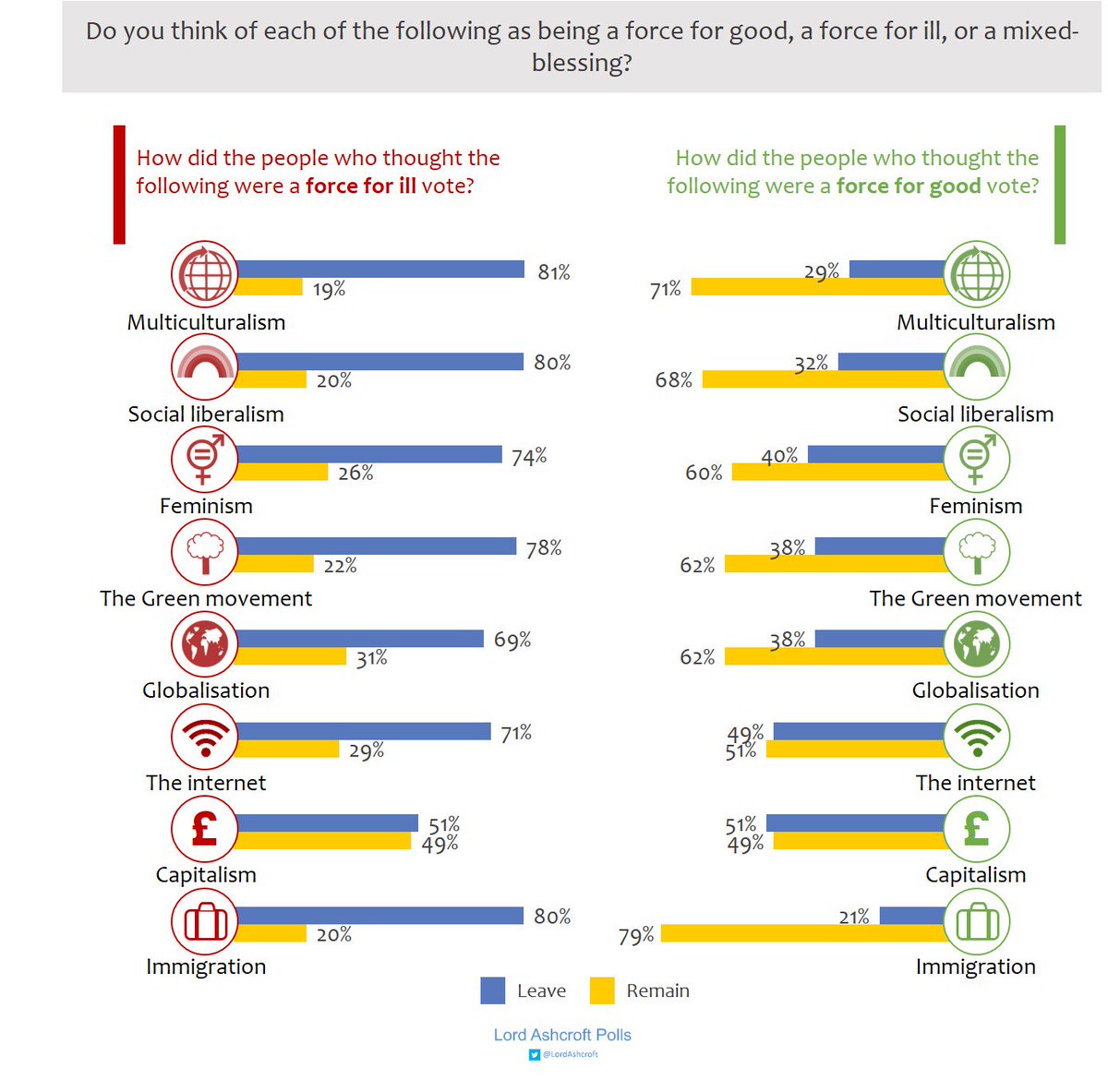
Xenophobia is part of this...but is it entirely foolish?
The Western super-elite (and their super-elite friends from other countries, including us, of course) are (at least materially) winners in this globalization until now and may feel great about it. But there are some other aspects to this love of complete and borderless globalization.
Friday, June 24, 2016
Indian History, Brexit, Trump and the Bombay Fornicator
Continuing with the
random thoughts theme:
1. Indian History: I think this short piece is a reasonably good summary of our
current state of knowledge about the Aryans and India. ..except for the wholly
unnecessary waffle on "out of India" theory (the weight of evidence
against that seems overwhelming), this is a good place to start. I posted this
on twitter and got several reactions that seem to indicate that Pakistanis
(even educated and reasonable ones) tend to repeat 1950s textbook cliches on
this subject even more than I expected. I think we should all read more about
this topic :)

You can start here
with this summary by a rather extreme Hindu-nationalist (I don't
know if the author would approve of this title, but i use it loosely and
without any pejorative intent; he can correct me if he happens to
disagree). This author has consistently displayed a vast knowledge of ancient
India and is worth reading for that reason, whether you agree or not with his overall interpretation of history and culture.
From the same guy, This description of an ancient indo-european feast is worth a read as well..
From the same guy, This description of an ancient indo-european feast is worth a read as well..
And of course, you can
always start with Razib Khan's blog posts about this topic including this, or this.... or this (with the caveat this his conclusions are likely to change
as more information comes in..as should the conclusions of anyone who is trying
to "seek truth from facts", as comrade Deng would say :)
3. Brexit. I took no interest in this until it was over,
but it is apparently going to be a very big deal. Anyway, it does look like the credibility of both the left-liberal elite AND the finance-capital elite is at a new low among the proletariat. More to come on this topic I am sure..


I asked on twitter and got this from @Sam_Schulman as an example of a good article about what happens next: The Norway Model ...
My first thought is that
this is likely not a useful comparison because there are too many differences
between Norway and Britain..and between the context in which they ask for deals
with the EU. but again, I don't know much about this. Reading suggestions
welcome.
3. Trump. I had written in March that his worthless team will sink him. I still
hopeful that his personal ignorance, superficiality and general lunacy, in
addition to his weak team, will cause him to lose big time in November, even
though there are real trends (as indicated by Brexit) that would be expected to
empower a candidate who opposes (or pretends to oppose) the globalist Left as
well as the globalist finance-capital Right...
But I think we do have
to keep fingers crossed. He is a conman and will disappoint everyone, including
those voting for him on nativist or proto-fascist grounds, but that does not
mean he cannot win. If Hillary goes too far into super-elite SJW territory and
Jihadi terrorists manage a serious atrocity very close to elections, then even
this Queens casino-operator could have a chance. I say this because I have a feeling that Hillary is something of a super-elite SJW at heart (though she is willing to sell out). There is a backlash against that ideology in the US these days (and as Brexit partially indicates, in other Western countries as well) and if she lets too much of that emerge, Trump may still have a chance, in spite of his obvious weaknesses and problems.
Fingers crossed. And
hoping that the FBI does a good job of keeping the jihadis at bay.
4. The inimitable
Salman Rashid writes about the Bombay Fornicator. A piece of furniture and a piece of history..

5. Orlando. Nothing new to say. As Loretta Lynch said, we don't know for sure what his motives were. Well, we know for sure he claimed to be killing for Islam/Islamic-state, but it cannot be denied that there are possible sub-conscious motivations at work here in addition to the obvious "spirit of Jihad" thing. (gays, latinos, paranoid-schizophrenia?). Perhaps we can say: "Jihadist Islam that encourages "spontaneous lone-wolf jihad" and endorses violence against gays led a psychologically disturbed and culturally confused Afghan-American to make use of lax gun laws to kill random gay people" .
About the spirit of Jihad thing, I wrote in some detail after the San Bernardino attacks. I am copying and pasting the last few paragraphs here:
Can any Muslim become radicalized and fall victim to spontaneous jihad syndrome at any time?
This is the right-wing fringe's mirror-image of the liberal belief that Islam never causes jihad and all of it can be explained by “inequality” or “Sykes-Picot” or some such story. Both mirror-images are clearly false. The real situation is that we can look at the Muslims of the world and see several disparate groups; Shias, Ismailis and Ahmedis are outside the Sunni Jihadist universe and so are not going to spontaneously take up arms in the war between shariah-based Islam and other civilizations. They are all relatively small minorities, but they are the most obvious examples of “Muslims who will not get radicalized and join the Sunni Jihad, foreign policy, Israel, Sykes-Picot and Picketty notwithstanding. These supposedly powerful motives for hating America will not cause these groups to go postal. There is a lesson in there somewhere.
Coming to Sunni Muslims, we have a very large number are “moderate Muslims”, which is shorthand for Muslims who were not brought up in shariah-compliant households and who do not practice that kind of Islam. Their numbers vary from country to country, but one can say with a lot of confidence that they are not spontaneous jihad material either. They can covert, but it is a slow process, it is observable and even preventable (if they are kept away from hardline preachers). Then there are the shariah-compliant Muslims who believe that the Shariah’s orders for Jihad are meant for very specific situations where a Sunni state has declared Jihad and those situations (fortunately) do not exist. So they get on with life in all parts of the world. Many of them are model citizens because they avoid intoxicants, deal honestly and follow the law. A very tiny fraction of them may “radicalize” but most will not. The same applies to converts. So yes, about these (small) groups one may say “they can radicalize” , but very rarely. And even then, there are warning signs and it is never an overnight process. Finally, there are the true-believer Jihadists. They have obvious links with Jihadist schools, groups and teachers. They are small in number and they are not hard for the community to identify, if is so chooses. And they are indeed high risk. Liberals see none of them, right-wingers see too many. Both are wrong.
I guess what I am saying is that notions of Muslim hordes just waiting for a chance to attack are far outside the bounds of reality. Common sense can actually be a guide here. There is no need to throw the baby out with the bathwater and equally there is no need to be willfully blind to warning signs. Biased agenda pushers on BOTH sides of this debate have obscured common sense options. And while Liberals may underestimate or misrepresent the threat from radical Muslims, conservatives frequently generalize the threat to all Muslims.
Last but not the least, all nutcases cannot be stopped beforehand. Some surprises will always happen in a large and complex society . There is no risk-free society, with or without Muslims. But this is not World-War Three. Not in the United States. In parts of Europe the proportion of jihadists is likely higher (for various reasons, including racism and multiculturalist liberalism). Meanwhile, in the core of the Muslim world itself, all bets are off. There is no well-articulated theology of liberal Sunnism. Other organizing ideologies (like Marxism and pan-Arab nationalism) have manifestly failed. The authoritarian regimes that exist are (for now) the only game in town. These authoritarian elites, who disproportionately benefit from the modern world, impose their will using a combination of force, persuasion and foreign support. But they lack a deep legitimating ideology. This crisis of ideology is extremely serious, and it may devour some of those countries (though the survival of Jordan is a good example of the fact that even the most arbitrary modern states have more strength than we sometimes imagine). Those Muslim states that are further away from the Arab heartland (and the Israeli-Palestinian conflict) may do better. They can frequently rely on other identities to maintain the legitimacy of their states and new Islams can arise in them with time. But even they will not be compltely free of Jihadist conflict. No state is completely free of conflict of course, and many conflicts unrelated to Islam or Jihad could easily kill millions and destroy whole countries. But predominantly Islamic countries do have the added burden of the conflict of Classical Islamic ideals with modern civilization (not justWestern civilization), and it will take time to resolve this conflict.
Hold on tight.
- See more at: http://www.3quarksdaily.com/3quarksdaily/2015/12/san-bernadino-terror-attack.html#sthash.6IuA9qYd.dpuf
Monday, June 6, 2016
Afghanistan, and some hints from Machiavelli
Comments from Dr Hamid Hussain on an article from Khalid Aziz (first posted at this site, Khalid Aziz original is here). Dr Hamid's comments are in red. At the end is a comment from Major Amin (in fuchsia) and a couple of completely tangential comments from me (in green) (Omar Ali)

From Dr Hamid Hussain:
A well informed friend wrote a detailed piece about Afghanistan and my comments.
----------------------------------------------------------------------------
Thanks Sir for an insightful and detailed review of the ‘snake pit’. Old chap Machiavelli is the right person to read when trying to understand the region. I don’t know whether you are still engaged in Track II on this matter and on such forums discourse is more polite. I’ll be a bit frank in my comments as I think we need to open more windows to let some fresh air. My own limited perspective is based on my own work and interaction with various players. I listen to every narrative and more interested in what ‘real’ thinking process is rather than national narrative which is mostly for public consumption. National narratives have moved from comic now to the realm of absurd. My comments in red and bold in your main text.
“A great majority of mankind are satisfied with appearances, as though they are realities and are often even more influenced by the things that seem than by those that are’. Machiavelli
Tuesday, May 31, 2016
Review of Dark Territory (Cyber war)
Book Review – Dark Territory
Hamid Hussain
Fred Kaplan’s new book Dark Territory is a history of cyber war. It traces the origins of efforts to protect computers and networks from hostile intrusions and then development of offensive capabilities to eves drop and even sabotage adversary’s computers and networks. Fred introduces us to many diverse characters from computer geeks to senior government officials involved in a struggle that has rarely seen sunshine as most of the work is highly classified. It was a 1983 movie War Games that prompted President Ronald Reagan to ask Pentagon if someone could break into Department of Defense (DOD) computers and tamper with missile launch. Chairman Joint Chiefs of Staff General John Vessey came back a week with the answer that the problem was much worse than they thought. This prompted the first attempts of cyber security.
Sunday, May 29, 2016
Akhtat Mansour, Islamic Wife-beating and Muslims for Trump 5-29-2016
Continuing the random thoughts theme.
This week began with a drone attack that dispatched Mullah Mansoor to meet his 72 virgins. More details have since been revealed about the Taliban chief's last journey and the Pakistani government has finally confirmed that he is dead, though the whereabouts of his remains are still a bit mysterious (it was reported that he has been buried in Spin Boldak, but the latest Pakistani government statement claims his body is still in Pakistan). The details of his life before the fatal strike are still confusing and contradictory.
This week began with a drone attack that dispatched Mullah Mansoor to meet his 72 virgins. More details have since been revealed about the Taliban chief's last journey and the Pakistani government has finally confirmed that he is dead, though the whereabouts of his remains are still a bit mysterious (it was reported that he has been buried in Spin Boldak, but the latest Pakistani government statement claims his body is still in Pakistan). The details of his life before the fatal strike are still confusing and contradictory.
Thursday, May 19, 2016
Random Thoughts 5-19-2016; Asian-Americans, Humanities, Trump..
I have been busier than usual, been reading more than before (trying to avoid Jaun Elya's barb: "he was writing when he should have been reading") and spending more time on Twitter than ever before, so blog posts have been few and far between. And with "products" due at work, things are not likely to change soon. So I thought I would try something different. Once a week or so, I will do something like an open thread. Just a few short comments on a few stories, most of them copied and pasted from comments I wrote on different internet sites. So here goes..
We Are Not Your Asian American (Political) Sidekick Razib Khan has a post up about "..(using Asian Americans) as a prop, often in a mendacious manner." . Read the whole thing. When I did, I had a thought about why some Asian-Americans (mostly in left-liberal academia and it's media periphery) are so eager to embrace a certain "we, the oppressed POCs of America" theme:
I would add that while Asian Americans in general suffer from discreet (or not so discreet) anti-Asian quotas that are put in place to limit their numbers in elite institutions, the kind of Asian-American intellectuals who write books about “POC solidarity” and run blogs called “racialicous” are in a different category; they are net (niche) beneficiaries of the “Asians as picked-upon-POC” framework they promote about Asians in America and this provides an obvious motivation for them to stick to it… For example, it gives them victim status in a social and academic setting where victim status is a very desirable good.
I understand that Asian Americans are not getting jobs on diversity quotas in most places, but the victim status still has clear psychological and social benefits and I strongly suspect that it also protects mediocre work (or whatever passes for work in the social sciences) from criticism OVER AND ABOVE the protection enjoyed by their White colleagues. Imagine 5 equally mediocre bullshitters who happen to be critical studies faculty at a liberal institution. They are not all equally protected. The White faculty member may benefit from connections and “White privilege”, the Jewish faculty from Jewish networking, but what defends the Asian guy? He or she has to rely on the POC card. Maybe they are still at a disadvantage versus equally mediocre Jews or Whites, but it is better than nothing. My point is that this motivation cannot be excluded when we think of WHY some Asian-American intellectual is pushing X or Y crap. In fact, I can think of examples of Indian-American writers and intellectuals who are clearly not being held to very high standards by the New York Times types and I suspect that successful manipulation of White guilt/POC privilege plays a part..
Of course, then there are those (few) intellectuals who are genuinely committed to a specific vision of world revolution and their views about the karma of brown folk follow naturally from that framework. Just to be clear, I am not thinking about them when I think of over-priviliged Asian-American kids blogging on Racialicious. Though both parties are happy to use each other, they are not the same. But truly committed revolutionary Marxists are few and far between. They can be criticized on other grounds, but psychological satisfaction and postmarxist postmodern BS are not their basic framework.

A commentator on another Razib Khan post (a post that touches on the touchy question: “Why Not Close Humanities Departments?”) wondered if shutting down the humanities would not take away a safety valve, one where " the left was effectively “tamed” in the U.S. They became part of the establishment through being allowed a little safe space away from capitalism. ."
I disagreed as follows:
Your argument rests on the assumption that college humanities departments have no real-world consequences at all, so it is safe to put leftists there and let them spout endless reams of pure bullshit….. But while they may not have immediate consequences, they may still have longer term consequences, no?… after all, they do set the intellectual agenda to some extent. ..it may be enough to matter. (This is my favorite theory for why a smart person like Edward Said spewed so much nonsense; he knew it was nonsense, but he was fighting a war and all is fair in love and war. He was doing nothing less than bringing down Western civilization, opera and all. Samson option)
On the other hand, there is always the possibility that social change happens a few years (at least) ahead of any effort to conceptualize or understand it. So if we are doomed, we are doomed. ..in this theory, it may still be possible for scattered individuals to grasp what is going on in some limited area and take advantage of foreknowledge, but even they only know a few things, not the overall picture.
It is what it is, nobody is in control and nobody can consciously alter the big picture… Fate rules everyone.
It is a cheery thought somehow :)
The New York Times has a piece about the rise of the Right (Austria’s Election Is a Warning to the West) which is remarkable for its total lack of self-awareness. The writer seems completely oblivious to the possibility that the endangered liberal consensus may have itself have some issues that have led it to this pass; maybe parts of the liberal framework are not very realistic? (as in "aligned with the world as it actually is") Could it be that one reason a buffoon like Trump has a serious shot at becoming president is because the mainstream liberal worldview contains some elements that seem far too unreal/laughable/wrong to far too many people?
Anyway, the sky may not be falling. Or at least, not completely so. I remain in the "weirdly optimistic' camp. There will be crises, but there will also be recoveries and new roads to new places..not necessarily recovery of specific parties or specific forms of liberalism... but the arc of history bends towards individualism and autism and more technology, with decreasing everyday violence in the more developed countries... Some places may crash and burn though...
Last but not the least, the BJP appears to be replacing a moribund Congress as India's "national" party . I posted this article from respected (liberal, not pro-BJP) columnist Siddharth Vardrajan on Twitter with the comment " I am not too optimistic abt a soft-landing for Hindutva (not all their fault btw, but bottom line= hard". I was asked to explain what I meant, so I will try: I mean that the BJP includes many people who are nationalist and pro-capitalist but whose "soft Hindutva" is willing to imagine an India that is a country of laws, where non-Hindus (even Muslims) have rights and protections just like everyone else (though not more than anyone else). This is a vision that could be workable. And I would not mind at all if it was made to work, even imperfectly. But there are many things working against it. An obvious one is the "hard Hindutva" band, who really cannot conceive of an India with 200 million Muslims and X million Christians (the "non-dharmic faiths") living as equal citizens (of course this group regard this fact as the fault of Muslims and Christians, who are seen as followers of alien ideologies that aim to undermine and eventually replace the ancient (Hindu) civilization of India, etc etc). This group is not easy to keep in check, especially if BJP comes to enjoy greater power, unfettered by alliances with "secular" forces. This particular threat to a peaceful and harmonious Indian future is frequently mentioned and is never too far from the mind of liberal commentators and this alone may prevent a "soft landing", but there is more; there is the fact that Muslims do in fact include elements who are also unwilling to aim for a truly secular India. There are going to be jihadis and suicide bombers in India's future, and as we have seen elsewhere, the very presence of groups this bigoted and this willing to kill can shift the entire culture towards sectarian warfare and "back to basics" civil war. There is also a very concerted Christian missionary effort that may not match the transnational loyalties of the ummah, but that does have money, modernity and Western support behind it and trouble (justified or not) is easy to imagine. Then there is capitalist disruption and India's not so ready for prime-time infrastructure, state and intelligentsia.. and last but not the least, there is India's Westernized postMarxist Left. Enuff said.
A soft landing will need visionary leadership and lots of luck. Need i say more?
With that cheery thought, i look forward to next week :)
PS: Here is Aasem Bakhshi on Lesley Hazelton's book about the Shia-Sunni split (and about popular history writing in general).
And don't miss Aqil Shah's excellent piece, which blows away the "drone blowback" theory so beloved of the regressive Left.

And memories of Josh Malihabadi for fans of Urdu poetry
and to show that I am not completely lacking in self-awareness about what I am doing here, a quote from Nate Silver's mea culpa about his Trump predictions:
"Without a model as a fortification, we found ourselves rambling around the countryside like all the other pundit-barbarians, randomly setting fire to things..."
Words to live by
We Are Not Your Asian American (Political) Sidekick Razib Khan has a post up about "..(using Asian Americans) as a prop, often in a mendacious manner." . Read the whole thing. When I did, I had a thought about why some Asian-Americans (mostly in left-liberal academia and it's media periphery) are so eager to embrace a certain "we, the oppressed POCs of America" theme:
I would add that while Asian Americans in general suffer from discreet (or not so discreet) anti-Asian quotas that are put in place to limit their numbers in elite institutions, the kind of Asian-American intellectuals who write books about “POC solidarity” and run blogs called “racialicous” are in a different category; they are net (niche) beneficiaries of the “Asians as picked-upon-POC” framework they promote about Asians in America and this provides an obvious motivation for them to stick to it… For example, it gives them victim status in a social and academic setting where victim status is a very desirable good.
I understand that Asian Americans are not getting jobs on diversity quotas in most places, but the victim status still has clear psychological and social benefits and I strongly suspect that it also protects mediocre work (or whatever passes for work in the social sciences) from criticism OVER AND ABOVE the protection enjoyed by their White colleagues. Imagine 5 equally mediocre bullshitters who happen to be critical studies faculty at a liberal institution. They are not all equally protected. The White faculty member may benefit from connections and “White privilege”, the Jewish faculty from Jewish networking, but what defends the Asian guy? He or she has to rely on the POC card. Maybe they are still at a disadvantage versus equally mediocre Jews or Whites, but it is better than nothing. My point is that this motivation cannot be excluded when we think of WHY some Asian-American intellectual is pushing X or Y crap. In fact, I can think of examples of Indian-American writers and intellectuals who are clearly not being held to very high standards by the New York Times types and I suspect that successful manipulation of White guilt/POC privilege plays a part..
Of course, then there are those (few) intellectuals who are genuinely committed to a specific vision of world revolution and their views about the karma of brown folk follow naturally from that framework. Just to be clear, I am not thinking about them when I think of over-priviliged Asian-American kids blogging on Racialicious. Though both parties are happy to use each other, they are not the same. But truly committed revolutionary Marxists are few and far between. They can be criticized on other grounds, but psychological satisfaction and postmarxist postmodern BS are not their basic framework.
A commentator on another Razib Khan post (a post that touches on the touchy question: “Why Not Close Humanities Departments?”) wondered if shutting down the humanities would not take away a safety valve, one where " the left was effectively “tamed” in the U.S. They became part of the establishment through being allowed a little safe space away from capitalism. ."
I disagreed as follows:
Your argument rests on the assumption that college humanities departments have no real-world consequences at all, so it is safe to put leftists there and let them spout endless reams of pure bullshit….. But while they may not have immediate consequences, they may still have longer term consequences, no?… after all, they do set the intellectual agenda to some extent. ..it may be enough to matter. (This is my favorite theory for why a smart person like Edward Said spewed so much nonsense; he knew it was nonsense, but he was fighting a war and all is fair in love and war. He was doing nothing less than bringing down Western civilization, opera and all. Samson option)
On the other hand, there is always the possibility that social change happens a few years (at least) ahead of any effort to conceptualize or understand it. So if we are doomed, we are doomed. ..in this theory, it may still be possible for scattered individuals to grasp what is going on in some limited area and take advantage of foreknowledge, but even they only know a few things, not the overall picture.
It is what it is, nobody is in control and nobody can consciously alter the big picture… Fate rules everyone.
It is a cheery thought somehow :)
The New York Times has a piece about the rise of the Right (Austria’s Election Is a Warning to the West) which is remarkable for its total lack of self-awareness. The writer seems completely oblivious to the possibility that the endangered liberal consensus may have itself have some issues that have led it to this pass; maybe parts of the liberal framework are not very realistic? (as in "aligned with the world as it actually is") Could it be that one reason a buffoon like Trump has a serious shot at becoming president is because the mainstream liberal worldview contains some elements that seem far too unreal/laughable/wrong to far too many people?
Anyway, the sky may not be falling. Or at least, not completely so. I remain in the "weirdly optimistic' camp. There will be crises, but there will also be recoveries and new roads to new places..not necessarily recovery of specific parties or specific forms of liberalism... but the arc of history bends towards individualism and autism and more technology, with decreasing everyday violence in the more developed countries... Some places may crash and burn though...
Last but not the least, the BJP appears to be replacing a moribund Congress as India's "national" party . I posted this article from respected (liberal, not pro-BJP) columnist Siddharth Vardrajan on Twitter with the comment " I am not too optimistic abt a soft-landing for Hindutva (not all their fault btw, but bottom line= hard". I was asked to explain what I meant, so I will try: I mean that the BJP includes many people who are nationalist and pro-capitalist but whose "soft Hindutva" is willing to imagine an India that is a country of laws, where non-Hindus (even Muslims) have rights and protections just like everyone else (though not more than anyone else). This is a vision that could be workable. And I would not mind at all if it was made to work, even imperfectly. But there are many things working against it. An obvious one is the "hard Hindutva" band, who really cannot conceive of an India with 200 million Muslims and X million Christians (the "non-dharmic faiths") living as equal citizens (of course this group regard this fact as the fault of Muslims and Christians, who are seen as followers of alien ideologies that aim to undermine and eventually replace the ancient (Hindu) civilization of India, etc etc). This group is not easy to keep in check, especially if BJP comes to enjoy greater power, unfettered by alliances with "secular" forces. This particular threat to a peaceful and harmonious Indian future is frequently mentioned and is never too far from the mind of liberal commentators and this alone may prevent a "soft landing", but there is more; there is the fact that Muslims do in fact include elements who are also unwilling to aim for a truly secular India. There are going to be jihadis and suicide bombers in India's future, and as we have seen elsewhere, the very presence of groups this bigoted and this willing to kill can shift the entire culture towards sectarian warfare and "back to basics" civil war. There is also a very concerted Christian missionary effort that may not match the transnational loyalties of the ummah, but that does have money, modernity and Western support behind it and trouble (justified or not) is easy to imagine. Then there is capitalist disruption and India's not so ready for prime-time infrastructure, state and intelligentsia.. and last but not the least, there is India's Westernized postMarxist Left. Enuff said.
A soft landing will need visionary leadership and lots of luck. Need i say more?
With that cheery thought, i look forward to next week :)
PS: Here is Aasem Bakhshi on Lesley Hazelton's book about the Shia-Sunni split (and about popular history writing in general).
And don't miss Aqil Shah's excellent piece, which blows away the "drone blowback" theory so beloved of the regressive Left.
And memories of Josh Malihabadi for fans of Urdu poetry
and to show that I am not completely lacking in self-awareness about what I am doing here, a quote from Nate Silver's mea culpa about his Trump predictions:
"Without a model as a fortification, we found ourselves rambling around the countryside like all the other pundit-barbarians, randomly setting fire to things..."
Words to live by
Subscribe to:
Posts (Atom)